METHODOLOGY · AGILE
What is Agile? A plain-English guide
Short cycles, early feedback and a plan that adapts. What Agile is, when it fits, and when to look elsewhere.
What is Agile?
Agile is a way of running projects in short cycles instead of one long line. Rather than planning everything up front, you plan a small piece, build it, show it to the people who will use it, and adjust. Then you repeat. The ideas were set out in the Agile Manifesto in 2001, written by a group of software developers who were tired of projects that delivered the wrong thing, late.
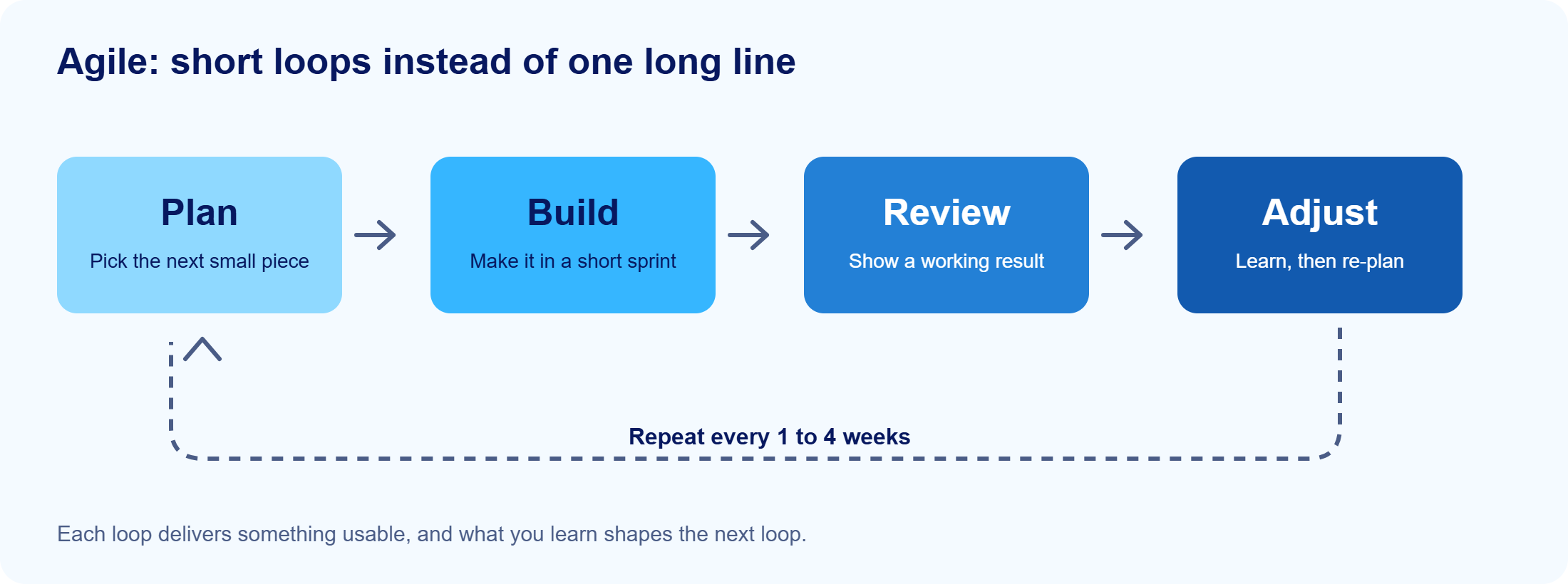
Frameworks such as Scrum and Kanban are specific ways of doing Agile. You do not need to pick one on day one: the mindset matters more than the vocabulary.
The core ideas, in plain English
- Work in short cycles. Typically one to four weeks, so you never go long without a result.
- Deliver something usable each cycle. A small working piece beats a big plan on paper.
- Get feedback early. Show real users real results while changes are still cheap.
- Welcome change. New information is expected, and the plan is allowed to move with it.
- Keep the team close. Short check-ins and shared ownership instead of long hand-offs.
Notice what is missing: nothing here says you must skip planning. Agile plans in smaller steps, more often.
What is an MVP?
MVP stands for minimum viable product: the smallest version of something that is genuinely usable and valuable enough to put in front of real people and learn from. It is not a rough draft and it is not half-built. It is small, but complete for one purpose: a booking form that really books, not a screen with a dead button.
The point of an MVP is learning. Before you invest months in the full version, you find out whether people want it and what they actually need.
Using iterations to deliver multiple MVPs
An MVP is not a one-off. In Agile you repeat the idea: each iteration ends with a version that people can use, and each one builds on the last using what you learned. Instead of one big launch, you ship a series of small, working releases.
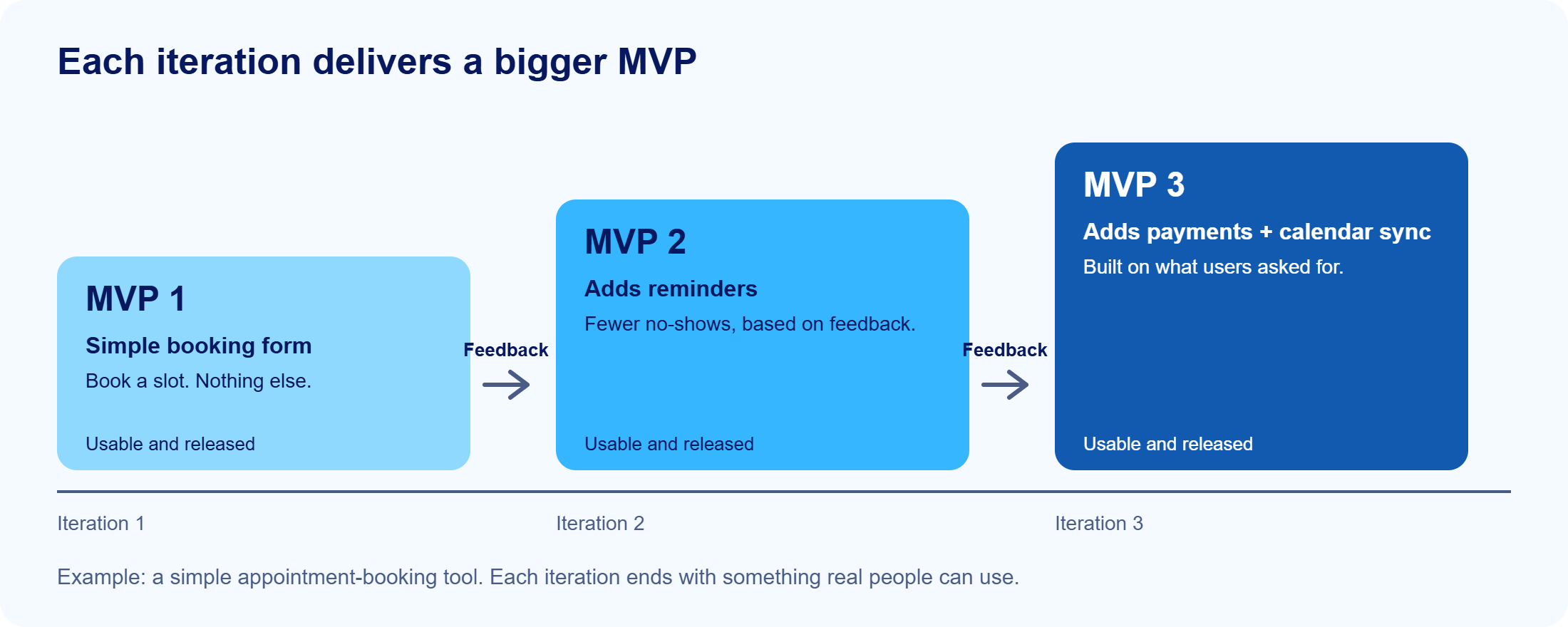
How to do it:
- Find the one thing. What is the single most important thing a user must be able to do?
- Cut the rest, for now. Park everything else on the list for a later iteration.
- Release it to real users. Even a small group is enough to learn from.
- Listen and measure. What did they use? What did they ask for? What confused them?
- Choose the next MVP. Add the most valuable improvement, then repeat.
The risk is stopping too early or shipping something nobody can use. Each MVP still has to be usable, or you will not learn anything real.
Why people like it: results arrive sooner
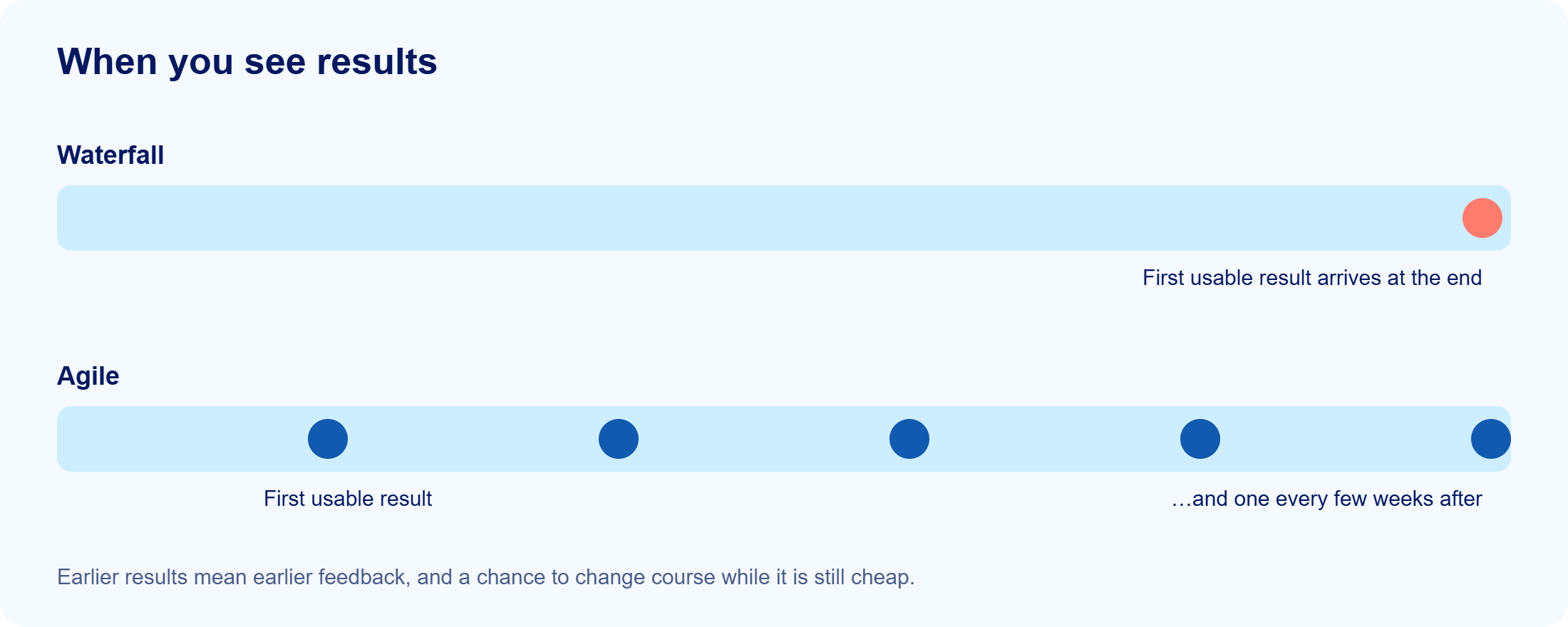
The biggest practical difference is when you see something working. That early feedback is what lets you change course before much has been spent.
When Agile fits, and when to think twice
Agile shines when you cannot know everything at the start. It struggles when scope, order and approvals have to be fixed up front.
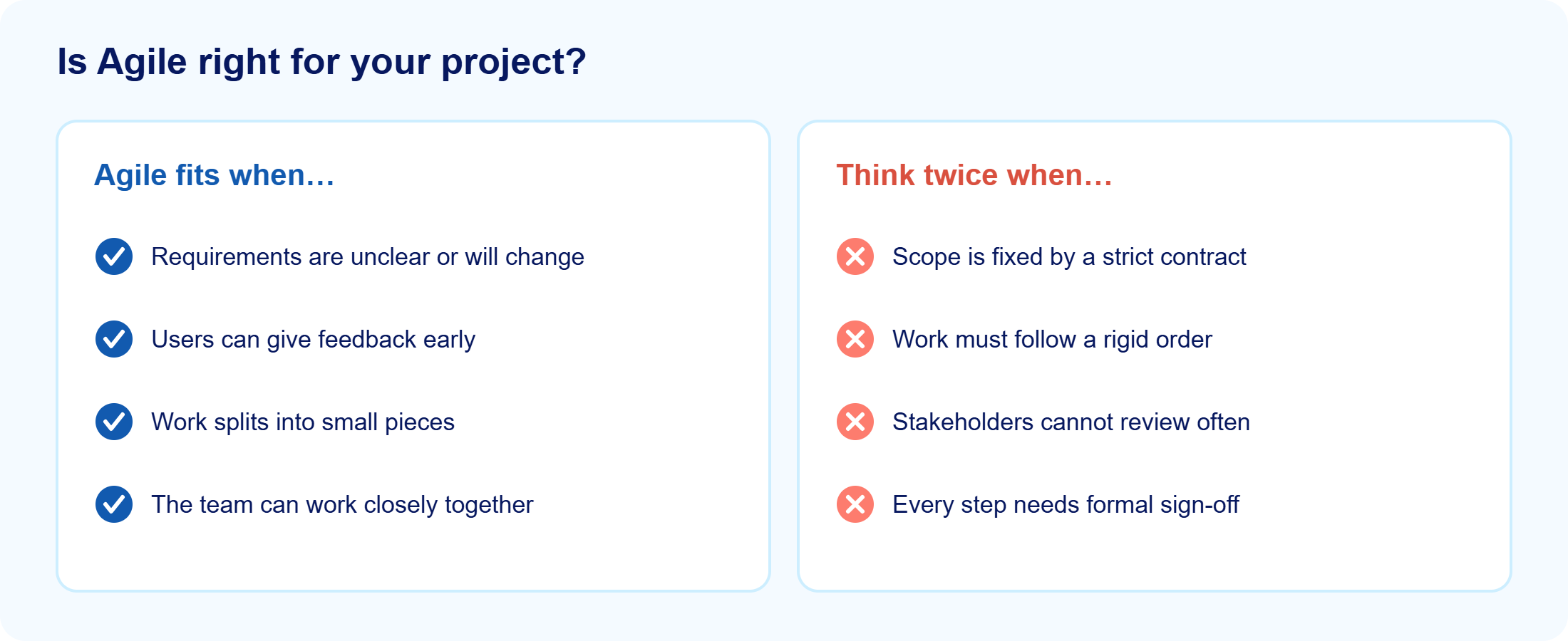
Not sure? Read Waterfall vs Agile: which fits your project?
Pros and cons
Pros
- Useful results early and often
- Easy to change direction
- Users stay involved
- Problems surface while they are small
Cons
- Harder to promise a fixed scope, date and budget
- Needs regular involvement from users and sponsors
- Can drift without a clear goal and a prioritised list
- Less natural for work that must follow a strict order
What I would actually do
Agile earns its place when you will learn what you need as you go. These are the situations where I would reach for it first:
- Software and digital products: where users react to real screens better than to requirements documents.
- New products or services: where you are testing an idea and expect to learn.
- Marketing and content work: where results can be measured and improved each cycle.
- Improvement and internal tools: where the people who use it are down the corridor.
- Any project with fuzzy requirements: where agreeing every detail up front would be guessing.
A quick test: if you could not honestly write the finished result on one page today, start Agile and let the first few cycles fill in the picture.
Your next step
Compare it with the classic approach, or grab the free kit with the charter and RAID log templates you will need whichever method you pick.

